The MCP Folly: More Context Isn't Always Better
The Model Context Protocol (MCP) is the latest trend in AI engineering. Overusing it is a fast track to context pollution and agent inefficiency.
Published 2025-11-24
Loading content...

The Model Context Protocol (MCP) is the latest trend in AI engineering. Overusing it is a fast track to context pollution and agent inefficiency.
I keep watching teams wire every Slack channel and Jira board into an agent through MCP, then wonder why it hallucinates. MCP is useful when you need a gated, repeatable bridge to one system. Dumping your whole toolchain into context is the same mistake as context poisoning, with extra JSON.
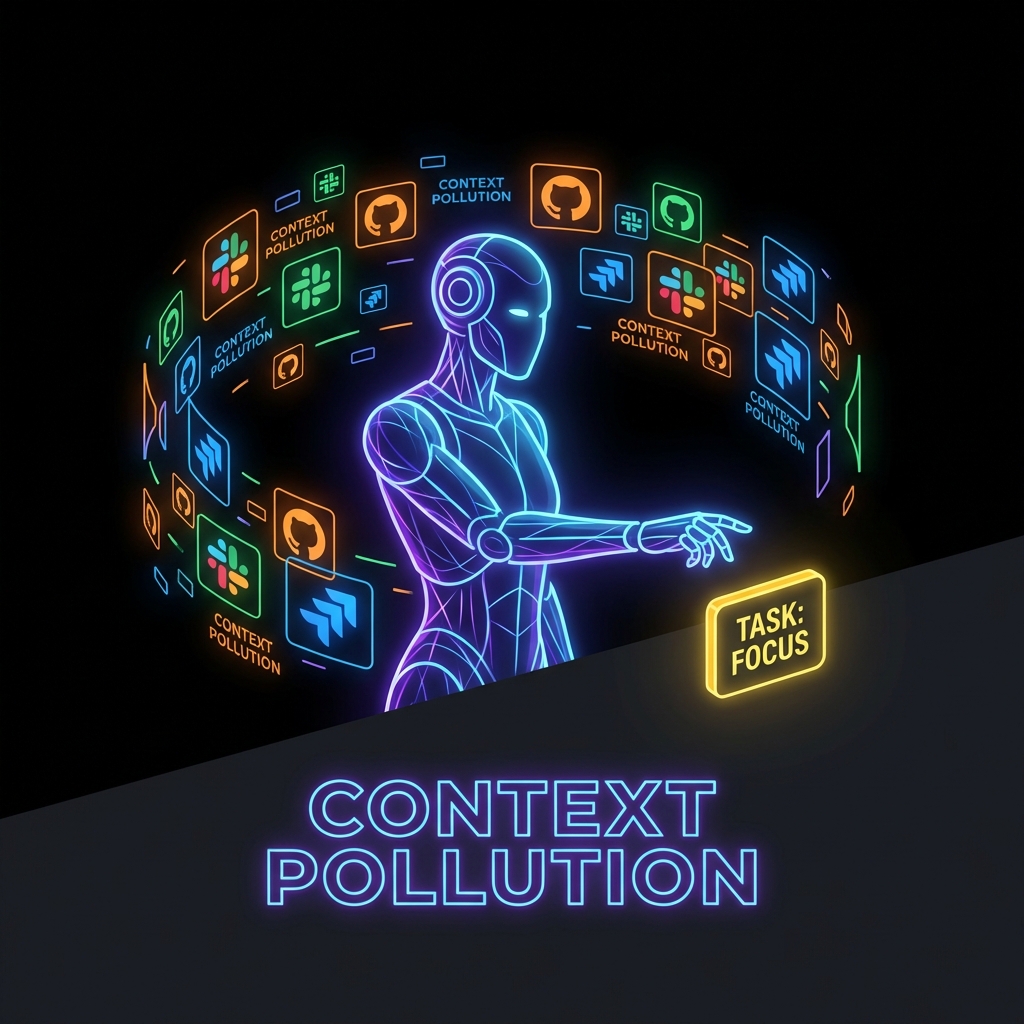
I fell for this myself. I connected more MCP servers because the Model Context Protocol made it easy, and Anthropic obviously wants you to use a protocol they invented. The agent got slower and dumber. Not because MCP is broken. Because I was feeding it everything instead of the two files and the log line that actually mattered.
MCP is an open standard for hooking tools and data into an agent without writing a new integration every time. In practice you get three kinds of hooks:
MCP reduces glue code, but connecting every available tool can cause problems.
Someone asks Claude to fix a checkout bug. The agent already has the repo indexed. Then the session also loads last week's Slack thread, open Jira epics, and three MCP resources nobody curated. The model spends tokens on noise and still misses line 45 in CheckoutController.ts.
I wrote about the same mechanic under a different name in context poisoning. MCP is just a sanctioned way to poison yourself faster.
MCP earns its keep in narrow cases:
For day-to-day coding I mostly want a lean @ on the files I'm editing, maybe a doc link, and a pasted stack trace. I use Vercel's MCP when I need deployment context. I don't need my entire SaaS stack in the prompt to rename a React component.
Models will get better at reaching into systems without us hand-building every bridge. MCP feels like that bridge era: useful now, not the forever architecture. I'd rather learn the habit of small context now than unwind a "connect all the things" setup in a year.
If your agent feels lost, try disconnecting half your MCP servers before you blame the model. Nine times out of ten the fix is boring. Fewer inputs, sharper ask, same human on the other side of the keyboard.